

No photo really captures a Diamond Head sunset. You have to be there. And the thing most visitors get wrong first is assuming you need to hike the crater to see it well. You don’t.
The state monument runs from 6:00 AM to 6:00 PM. The last reservation happens at 4:00 PM. Entry is cut off by 4:30 PM. Everyone is out by closing, no exceptions. So a sunset hike is off the table by default, especially in summer when Honolulu doesn’t lose the sun until after 7:00 PM some nights. The workaround is simple enough: watch from Waikiki, from Kapiʻolani Park, or somewhere along the coast, and let Lēʻahi sit in the background instead of standing on top of it.
7 Best Diamond Head Sunset Viewpoints
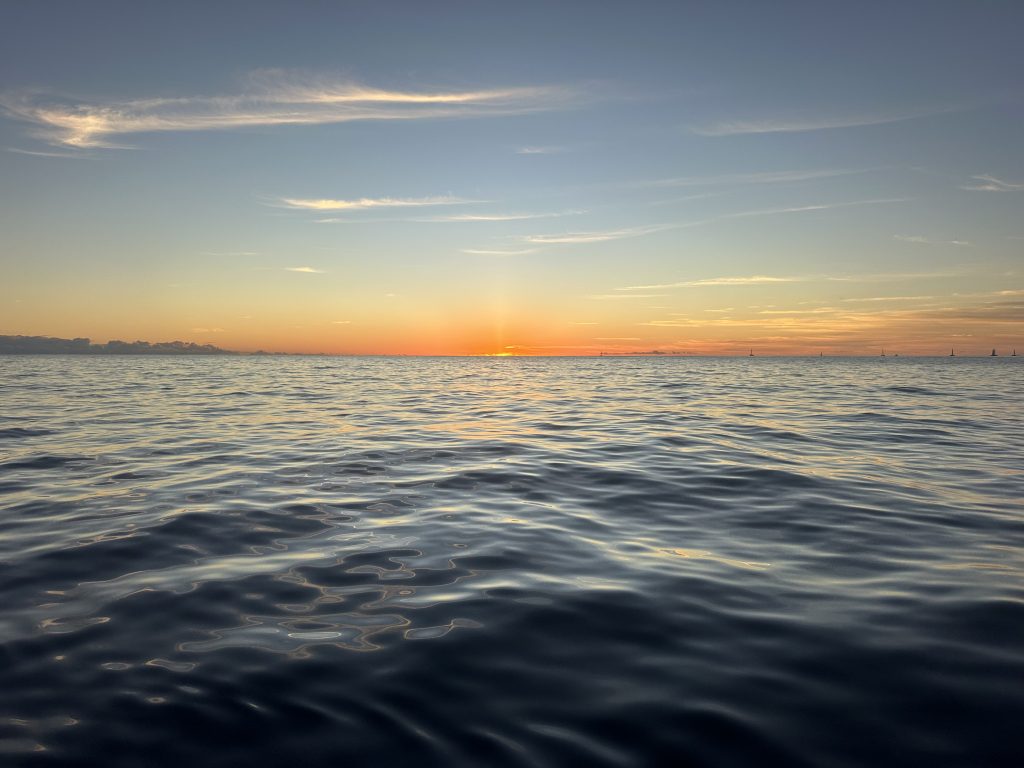
Kūhiō Beach is the obvious starting point, and it earns that reputation. Diamond Head sits in the distance, palm trees and shoreline filling in the rest of the frame without much effort on your part. Get there 30 to 45 minutes ahead of sunset for a decent spot. If you are taking photos, crouch down lower than feels natural; a shot with a bit of moving water in front almost always beats one taken standing up straight.
Kapahulu Groin is the moodier option. Rocks, waves, Diamond Head, all stacked into one frame, and it reads more dramatic than a plain beach shot. The rocks get slick when the surf picks up, so mind your footing. Once the light is mostly gone, a tripod earns its keep for the longer exposures.
Families tend to gravitate toward Fort DeRussy Beach. There is more room to spread out, part sand, part open park, so a blanket and some space to let kids run around actually works here. Trees and nearby structures double as a frame if you’re shooting. Just get there early, because it fills up.
Queen’s Surf Beach, tucked near the eastern edge of Waikiki close to Kapiʻolani Park, gives one of the more textbook Diamond Head shots out there, crater rising right past the shoreline. Waves rolling in add motion. Put a person somewhere in the frame and suddenly the scale of the whole thing reads differently.
Not a beach person? Kapiʻolani Park swaps sand for grass, which is a nice change of pace some evenings. Spread a picnic out, take a walk, whatever, just keep half an eye on the crater as the color shifts. Wide shots do well here. If clouds show up, leave room for sky. That is usually where things get interesting.
Sans Souci Beach sits further east still, smaller and quieter than the main stretch of Waikiki. Because it’s compact, arriving early matters more than it does at the bigger beaches. A few swimmers or beachgoers somewhere in the shot helps show scale.
Then there is Ala Moana Beach Park, the widest angle on this whole list, Diamond Head sitting further off across the water with Honolulu’s skyline starting to show up as evening sets in. Don’t pack up the second the sun’s gone. Blue hour runs for several minutes after, the sky keeps shifting, and city lights start creeping in, all without you moving from where you’re standing.
When Is Sunset in Honolulu?
In 2026, figure roughly 6:00 PM in January, closer to 5:48 PM by early December, stretching to around 7:15 PM come summer. Check the actual date before heading out, then build in 30 to 60 minutes before that time for the light itself, not just the moment the sun disappears. In 2026, figure roughly 6:00 PM in January, closer to 5:48 PM by early December, stretching to around 7:15 PM come summer. Check the actual date before heading out, then build in 30 to 60 minutes before that time for the light itself, not just the moment the sun disappears.
Worth knowing: clear skies don’t guarantee a good show. Clouds, haze, whatever is floating around in the atmosphere that evening, all of it can change the colors from one night to the next in ways you can’t really predict.
Diamond Head Sunrise vs. Sunset
Two different outings. Don’t try to squeeze them into one day.
Sunrise means hiking during operating hours, and non-residents need a reservation booked up to 30 days out, with the hike itself running 60 to 90 minutes round trip. Sunset means staying outside the monument entirely, camera in hand, no summit logistics to worry about, just the light doing its thing along the coast.
Want both on the same trip?Totally doable, just split them across separate days.
10 Photography Tips for a Diamond Head Sunset
Get there early; good compositions take a few minutes to find, and rushing shows in the final shot. Use whatever is in front of you, palm trees, rocks, people, waves, to build depth into the frame rather than shooting flat. Shoot lower than feels comfortable. It almost always looks better than standing.
A few quick ones: keep Diamond Head slightly off-center instead of dead middle, pull your exposure down a touch if the sky’s blowing out, and don’t skip vertical shots since portrait mode grabs more sky and more crater in one frame.
Drop a person somewhere in the shot. It is a cheap trick, but it works, and suddenly the crater reads as genuinely massive instead of just big. Bring a tripod for after the sun’s down, when exposures get longer and a steady hand isn’t enough anymore.
Take more than one version of each composition. Light shifts fast enough that you often won’t know which frame actually worked until you’re looking at them later. And don’t pack it in the second the sun disappears. Blue hour tends to be the best part, and most people miss it because they have already left.
Want a Different View? Watch Diamond Head From the Water
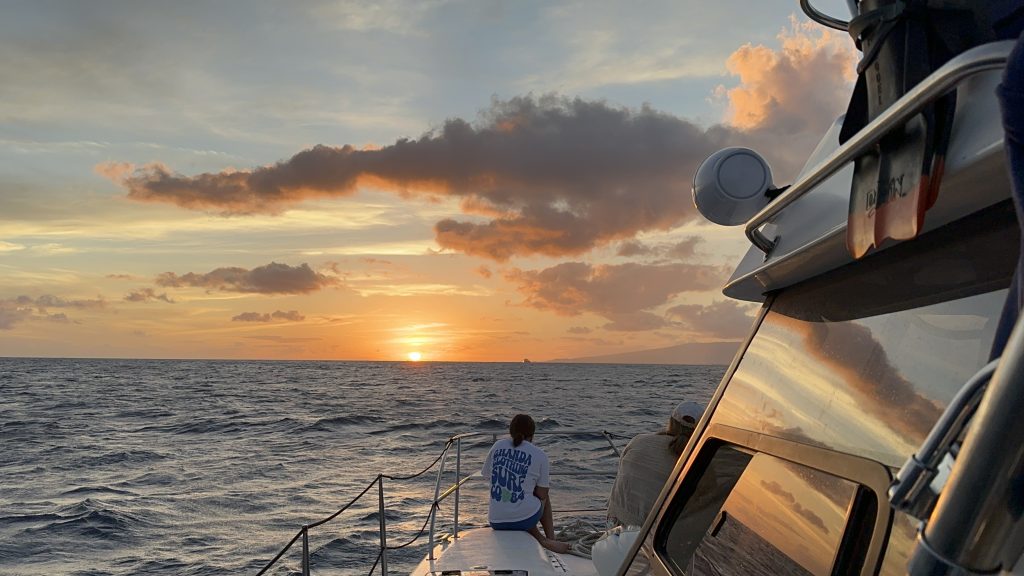
A beach gives you one angle, fixed, the same view the whole time. A boat moves, which changes how the crater sits against the coastline as you go.
Hawaii Ocean Charters runs a shared Waikiki Sunset Cruise, roughly 1.5 hours, open to guests 7 and older, tracking the south shore with Waikiki and Diamond Head visible the entire time. There’s also a private catamaran option for groups up to six.
The shared cruise departs from Kewalo Basin Harbor. Shaded and open seating, a marine restroom, soft drinks included, plus a cooler if you would rather bring your own. What it really changes, though, is the photo angle. Instead of standing on shore aiming at Diamond Head, you are out on the water turning back toward it, Waikiki’s coastline stacked up behind.
Diamond Head Sunset FAQs
- Can you hike Diamond Head at sunset?
No. The monument closes at 6:00 PM, and everyone has to be out by then, so a sunset summit isn’t really an option. - What time should you actually show up?
Somewhere between 30 and 60 minutes before sunset. Enough time to grab a spot and watch the light build rather than just catching the last few seconds. - Best spots to shoot from?
Kūhiō Beach, Kapahulu Groin, Queen’s Surf, and Kapiʻolani Park cover most of what you’d want, each with a slightly different feel. - Can you actually see it from a sunset cruise?
Yes, that’s the whole point of Hawaii Ocean Charters’ Waikiki Sunset Cruise. - Is winter better than summer for colors?
Not particularly. Cloud cover on a given night matters more than the season you’re visiting in.
Plan Your Diamond Head Sunset
You don’t need to race the sun up a crater to get something worth remembering out of this. Hike it earlier in the day if the summit’s part of your plan, then come back down for the evening show separately.
Pick a beach or a park, get there with time to spare, and don’t leave the second the sun’s below the horizon. Curious about the water view instead? Worth trying at least once.
Mostly it just comes down to giving yourself the time to watch it happen, instead of treating it like something you’re racing against.
