
Nearly everyone who books a dolphin trip has the same picture in their head: swimming right alongside the pod. It is a nice idea. It is also not how spinner dolphins actually spend their days, and once you understand why, the whole trip makes more sense.
We deal with this constantly at Hawaii Ocean Charters. Guests want the close-up moment. What actually gets you a good sighting is working around the dolphins’ schedule, not trying to override it.
Why These Dolphin Facts Are Interesting
Because it changes what kind of trip you have. Knowing roughly when dolphins settle into a bay to rest means you can time things better instead of just hoping. Knowing where they typically feed keeps you from wasting an hour looking at empty water.
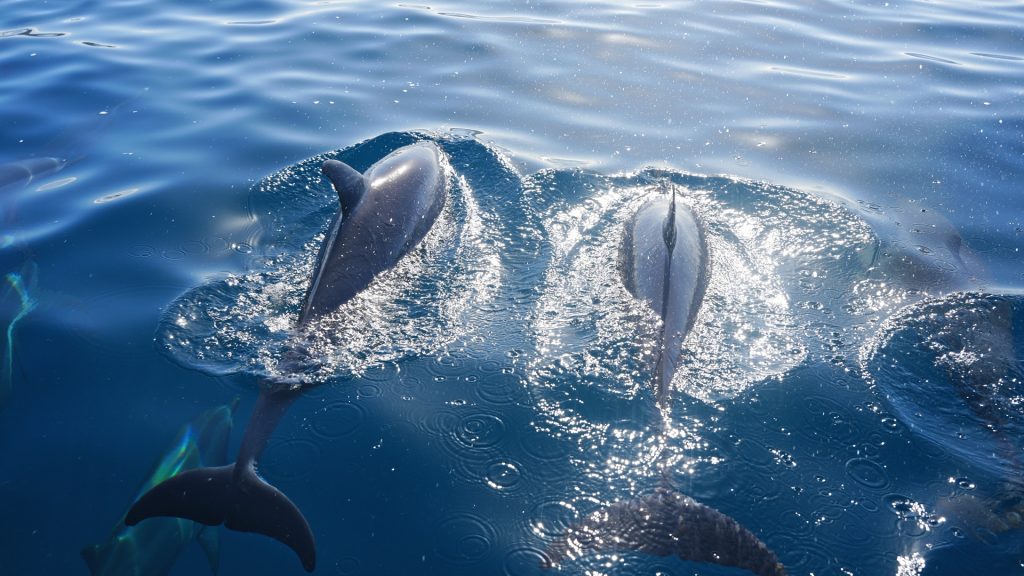
There’s a legal piece too. Swimming with spinner dolphins is against federal law in Hawaii, and boats need to stay 50 yards off. The 50-yard rule is the legal minimum for intentional approaches. If dolphins approach on their own, operators must not pursue or engage them.
7 facts worth knowing
1. They spin for more than one reason
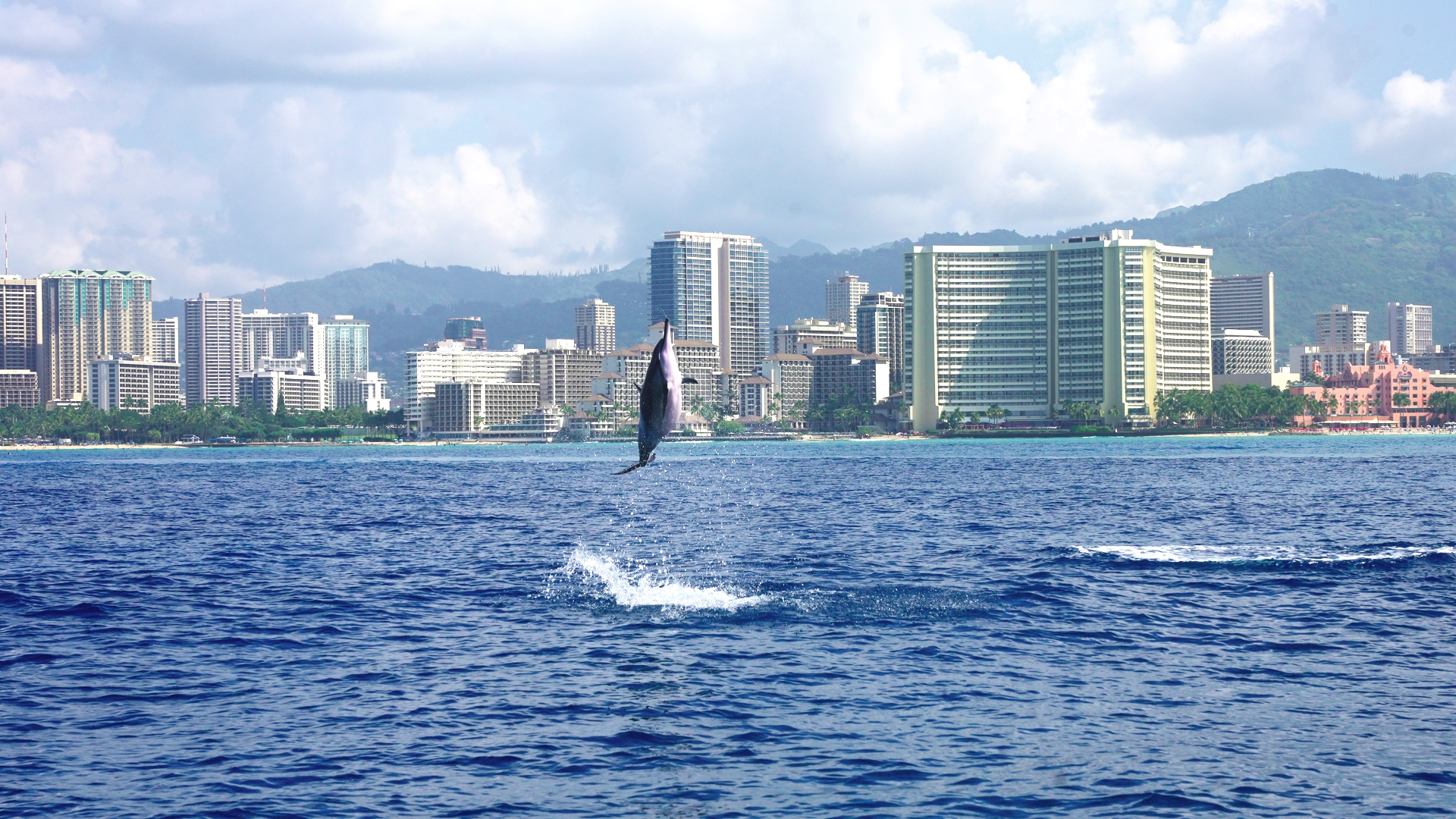
The leaping, twisting jumps spinner dolphins are named for aren’t just showing off. A dolphin can rotate multiple times before hitting the water again. Some of it looks like pure fun, and some of it probably is. Researchers also think spinning communicates something to the rest of the pod, or helps shake off parasites clinging to their skin.
2. Daytime means shallow water and rest
Spinner dolphins hunt through the night and then move into calm, shallow bays by morning. These areas give dolphins time to rest, socialize, and care for their young after nighttime foraging. This downtime isn’t casual lounging. Mothers use it to nurse calves, pods use it to bond, and everyone needs it to recover from a long night offshore. It’s the entire reason behind the 50-yard rule — push in too close and you disrupt something they actually need.
3. Nighttime is when they hunt
Once it’s dark, the dolphins head into deeper water after small fish, squid, and shrimp that rise toward the surface at night. Their prey moves upward through the water column at night, giving the dolphins a chance to feed. Dolphins often hunt in small coordinated groups rather than alone. So if you are expecting to see active feeding during a daytime tour, you probably won’t. That behavior almost always happens well offshore, after dark.
4. Different populations stick to their own patch of ocean
Hawaiian spinner dolphins are divided into several distinct stocks. National Oceanic and Atmospheric Administration (NOAA) identifies five island-associated stocks, including Oʻahu/4-Islands and Hawaiʻi Island, along with a separate pelagic stock farther offshore. Local captains learn these patterns through years of observing the same waters.
5. They are small but surprisingly powerful
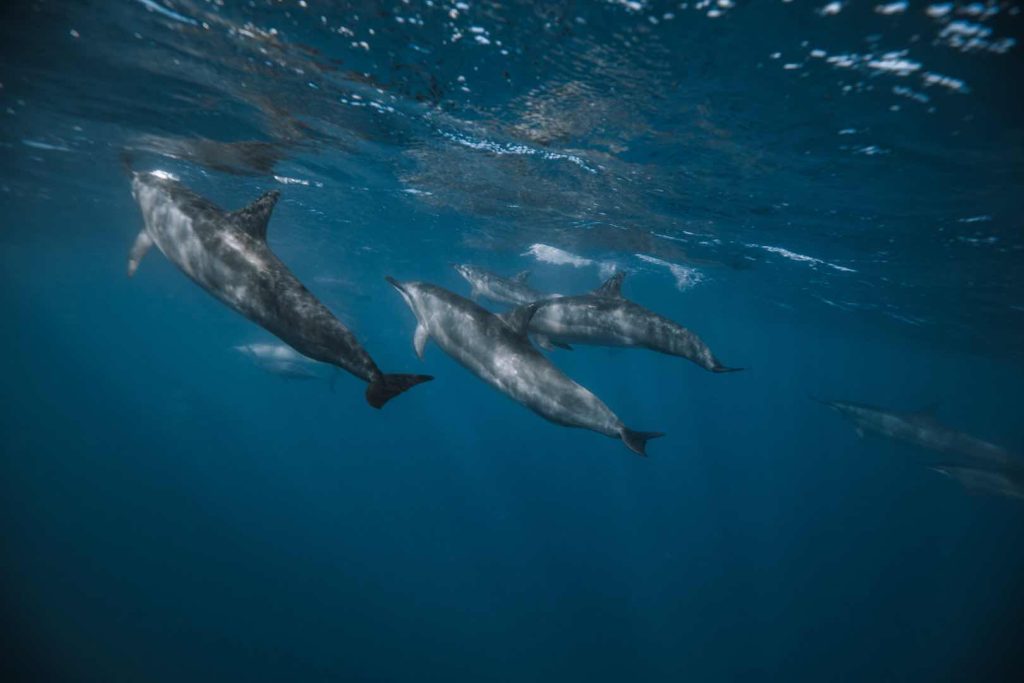
Spinner dolphins are relatively small, slender dolphins, built for fast and agile swimming. Slim body, long beak, dark gray back, white belly, with a dark stripe running from the flipper up to the eye. Don’t mistake small for weak, though. They cover a serious distance offshore every night and can launch themselves several feet into the air with real force behind it.
6. Resting bays double as nurseries
That is easy to forget when you are just excited to see dolphins. Mothers nurse calves there. The whole pod often drifts in slow loops together while resting. A boat crowding in can scatter that group and separate calves from their mothers, which is about as disruptive as it sounds.
7. They are protected even without an endangered listing
Spinner dolphins fall under the Marine Mammal Protection Act, and in Hawaii specifically, both swimming with them and approaching within 50 yards are against federal law. Charters that take this seriously build their whole route around it, not as an afterthought.
Where each group actually lives
The Oahu/Maui Nui stock uses bays scattered across those islands. The Big Island stock sticks to bays on the west side of Hawaii Island. A more pelagic group stays offshore in deep water and skips the inshore resting entirely.
Heading out from Oahu, you’re almost certainly watching the Oahu/Maui Nui stock. They tend to favor the same handful of bays over and over, which is exactly the kind of pattern a good local captain has spent years learning.
Watching without messing it up
Keep your distance. Keep quiet. Don’t cut across a pod’s path trying to close the gap yourself. Let the captain hold position and let the dolphins decide if they want to come closer.
If dolphins approach on their own, don’t chase, touch, feed, or encourage them. Follow your captain’s instructions and give them space. Reaching out to touch or feed them isn’t just disrespectful, it’s illegal.
Quick reference
- Stay at least 50 yards back when viewing from a boat.
- Hold a steady course — no sudden moves near the pod.
- Let the dolphins set the pace, not the other way around.
- Never swim with, chase, or intentionally approach spinner dolphins.
- Never chase or try to herd a pod toward shore.
- Never feed or touch them, full stop.
Bottom line
Spinner dolphins are genuinely something to see, but the good version of that experience depends on respecting their need for daytime rest. Good timing, real distance, and a captain who actually knows the water beats a fast boat every time.
Would you rather crowd in for a closer look, or hang back on a smaller boat and let them come to you if they feel like it?
FAQs
- Can you swim with spinner dolphins in Hawaii?
No — it’s prohibited under federal law, along with getting within 50 yards during the day. - Where’s a decent spot to see them near Oahu?
Spinner dolphins use several calm, nearshore areas around Oahu. Your captain can help identify appropriate viewing areas based on current conditions. Your captain will know which ones are active that particular day. - Are they around Oahu all year?
The Oʻahu/4-Islands stock is considered resident rather than seasonal, so spinner dolphins can be seen around Oahu throughout the year. Calm conditions usually mean better sightings. - Why rest during the day specifically?
It lets them recover from a night spent hunting offshore, and it gives mothers real time to nurse and bond with their calves.
