
Hawaii’s reefs are loud with color and not loud like noise. Fish don’t make much sound, but you know what we mean the second you put your face in the water and see a triggerfish, a parrotfish, and something bright yellow all cross paths in the same five seconds. You don’t need to know every species before you snorkel. Learning a handful, though, changes the whole thing, because suddenly you’re not just seeing “fish,” you’re seeing that one, the one with the pig name, the one everyone in the gift shop t-shirts is obsessed with.
Some of these are Hawaiian endemics which means they are found here and nowhere else. Others just happen to be regulars all over the tropical Pacific, and Oahu’s reefs are one more stop on their map. Fifteen worth learning, before your next trip in.
How to Identify a Hawaiian Reef Fish
Start with the fish’s shape before focusing on its color. Body shape, fin placement, and features such as a snout or tail spine can make identification easier, while colors and patterns may vary between species and life stages.
- Butterflyfish: thin, disc-like, bold patterns, a narrow snout
- Tangs and surgeonfish: oval body, a sharp little spine near the tail
- Wrasses: longer, and their colors can shift a lot as they age
- Parrotfish: chunky, with a beak you can’t really mistake for anything else
Once you know these basic shapes, identifying individual species becomes much easier. Now, let’s look at 15 colorful reef fish you may encounter around Hawaiʻi.
1. Humuhumunukunukuapua’a (Reef Triggerfish)
Include photos
This is the state fish, and it is not shy about its wedge-shaped body, angular blue and yellow and white markings that look almost hand-painted. You will know it when you see it.
2. Saddle Wrasse
These can be found everywhere around Oahu. . What throws people off is how much this fish changes across its life, since it can shift both sex and color as it grows, but adults carry a reddish saddle marking right behind the head, and once you clock that, you will never miss it again.
3. Yellow Tang
The bright yellow body makes the yellow tang one of the easiest Hawaiian reef fish to recognize. Its oval shape, pointed snout, and small fins create a distinctive profile that stands out against darker reef surfaces. You may see yellow tangs grazing on algae around rocky areas and coral reefs.
ID tip: Look for an entirely yellow body with a narrow snout and a small white spine near the tail.
4. Moorish Idol
The Moorish idol gets confused for a butterflyfish all the time because of its tall, flattened body, but that long trailing dorsal fin and bold black, white, and yellow banding give it away once you know what to look for.
5. Parrotfish (Uhu)
The beak is the giveaway here, formed from fused teeth that let parrotfish scrape algae from the reef. If you’re close enough underwater, you can sometimes hear the crunching as they feed, which sounds strange the first time and becomes surprisingly satisfying once you know what’s making it.
6. Raccoon Butterflyfish
The raccoon butterflyfish gets its name from the dark mask that stretches across its eyes. Its pale body features contrasting black and yellow markings, giving it a pattern that remains distinctive even when it swims among busy reef scenery. It is often seen around coral and rocky reef habitats.
ID tip: Start with the dark eye mask, then look for the yellow and black markings across its pale body.
7. Ornate Butterflyfish
Pale body, orange and reddish stripes running diagonal instead of straight down the sides, and that angle alone is basically the whole ID.
8. Longnose Butterflyfish
The longnose butterflyfish has an unusually extended snout that helps it reach food tucked inside narrow cracks and crevices in the reef. Its Hawaiian name, lauwiliwilinukunukuʻoiʻoi, is famously long and is shared by the two longnose butterflyfish species found in Hawaiian waters.
ID tip: Look for the long, narrow snout and bright yellow-and-white body pattern.
9. Hawaiian Sergeant
Vertical dark bars across the body. A damselfish, and the males get seriously protective guarding eggs on bare rock, they’ll dart at you if you get too close. It’s not personal.
10. Achilles Tang
These have dark, almost black bodies, with one bright orange patch near the tail like someone dabbed paint on it. These are found usually hanging around rough, wave-churned reef edges rather than calm waters.
11. Manini (Convict Tang)
These have black and white vertical stripes, exactly like the name implies, and are almost never alone. They travel in groups big enough that you will spot the pattern before you spot the fish.
12. Cleaner Wrasse
These are small and easy to miss entirely if you are not looking for them. These fish run little “cleaning stations” on the reef where bigger fish actually line up and hold still, letting the wrasse pick parasites right off their skin, which sounds made up but isn’t.
13. Bluestripe Butterflyfish
The bluestripe butterflyfish is endemic to Hawaii, meaning its natural range is limited to the Hawaiian Islands. Its pale body is covered with vivid blue diagonal stripes that make it especially easy to distinguish from other butterflyfish. Look for it around coral reefs and sandy areas where it can forage.
ID tip: Look for the series of bright blue diagonal stripes running across its pale body.
14. Potter’s Angelfish
Potter’s angelfish is another colorful species endemic to Hawaii and is noticeably smaller than many angelfish found elsewhere. Its orange-red body is covered with blue markings, while the edges of its fins create an almost outlined appearance. It can be shy, so slow movements may give you a better chance to observe it.
ID tip: Look for the vivid orange-red body contrasted by blue markings around the fins and body.
15. Goatfish
Locally called weke, there are several species of goatfish swimming Hawaiian waters. Two whisker-like barbels hang under the chin, used for probing sand, not coral. So look for one hovering over open patches rather than reef itself.
Where Can You See Reef Fish in Hawaii?
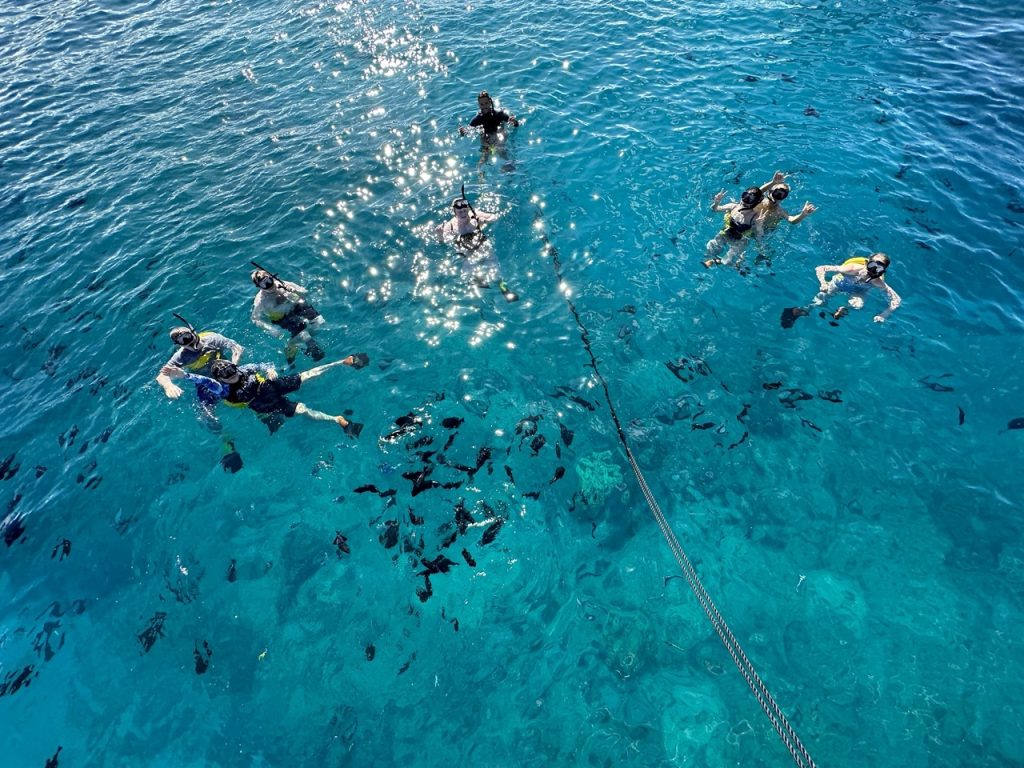
It all depends on the day. Reef, water conditions, depth, time of day, all of it matters more than people expect.
- Turtle Canyon: shallow, close to Waikiki, solid variety
- Hanauma Bay: protected, and it shows in how much lives there
- Other Oahu reefs: less developed, sometimes better, depending on conditions that day
Water clarity shifts constantly, so there is no single spot that guarantees the same fish twice. Booking through Snorkeling in Waikiki, Honolulu takes a lot of that guesswork off your hands, since our crews already know which reefs are actually worth visiting before you even get wet.
What Can You Expect on a Waikiki Snorkeling Tour?
A snorkeling tour is about more than getting in the water and hoping something interesting swims past. For visitors who are new to Oahu or unfamiliar with local reefs, having a planned trip can make the experience much easier.
You can use this fish guide before your trip to learn a few species, then see how many you can recognize once you’re in the water. Yellow tangs, manini, parrotfish, butterflyfish, and other reef fish become much more interesting when you know what you’re actually looking at.
If you are snorkeling around Waikiki, a guided trip by Hawaii Ocean Charters also gives you a chance to enjoy the reef without spending your entire morning deciding where to go. Check the current tour options, choose the trip that fits your plans, and save this list so you know what to look for once you get in the water.
Turn Your Snorkel Into a Fish Hunt
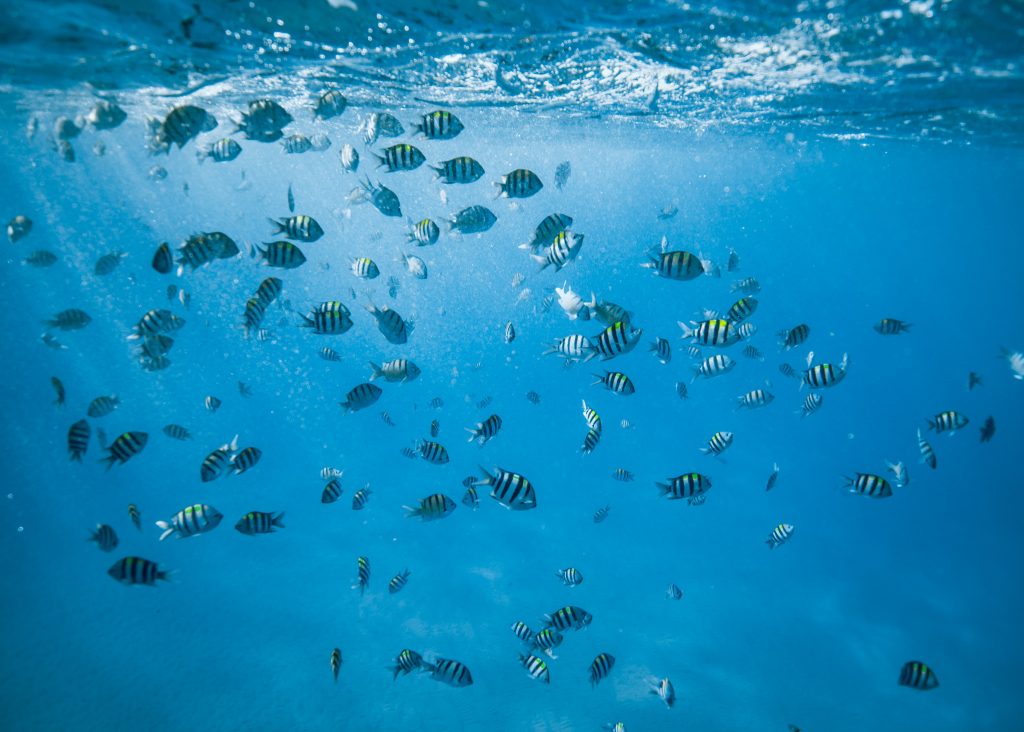
You don’t need all 15 memorized before you get in. Start with four: yellow tang, manini, the state fish, and Moorish idol. Once those become familiar, other shapes and patterns start standing out on their own.
It is also completely fine if you cannot name everything you see. Part of snorkeling around Oahu is not knowing exactly what will swim past next. The fun comes from paying attention and gradually recognizing more of the reef around you.
If you would rather have a planned snorkeling experience around Waikiki, Snorkeling in Waikiki, Honolulu gives you a way to get out on the water and put this guide to use. Learn a few fish before your trip, keep your eyes moving once you’re in the water, and see how many you can recognize for yourself.
Wherever you snorkel, give the marine life plenty of space and let the reef set the pace. You might recognize more than you expected by the time you climb back out.
Quick FAQ
- What’s the most common reef fish in Hawaii?
No single species runs the show everywhere. Manini, yellow tangs, wrasses, and various surgeonfish show up often. - What’s Hawaii’s state fish?
Hawaii’s state fish is the reef triggerfish, better known by its Hawaiian name, humuhumunukunukuapuaʻa, which is one of the most recognizable fish you will encounter around the islands. - Which Hawaiian reef fish are endemic?
Potter’s angelfish and the bluestripe butterflyfish, both found only in Hawaii and nowhere else. - What’s the easiest reef fish to identify?
Yellow tangs, manini, the state fish, Moorish idols. Start there.
